
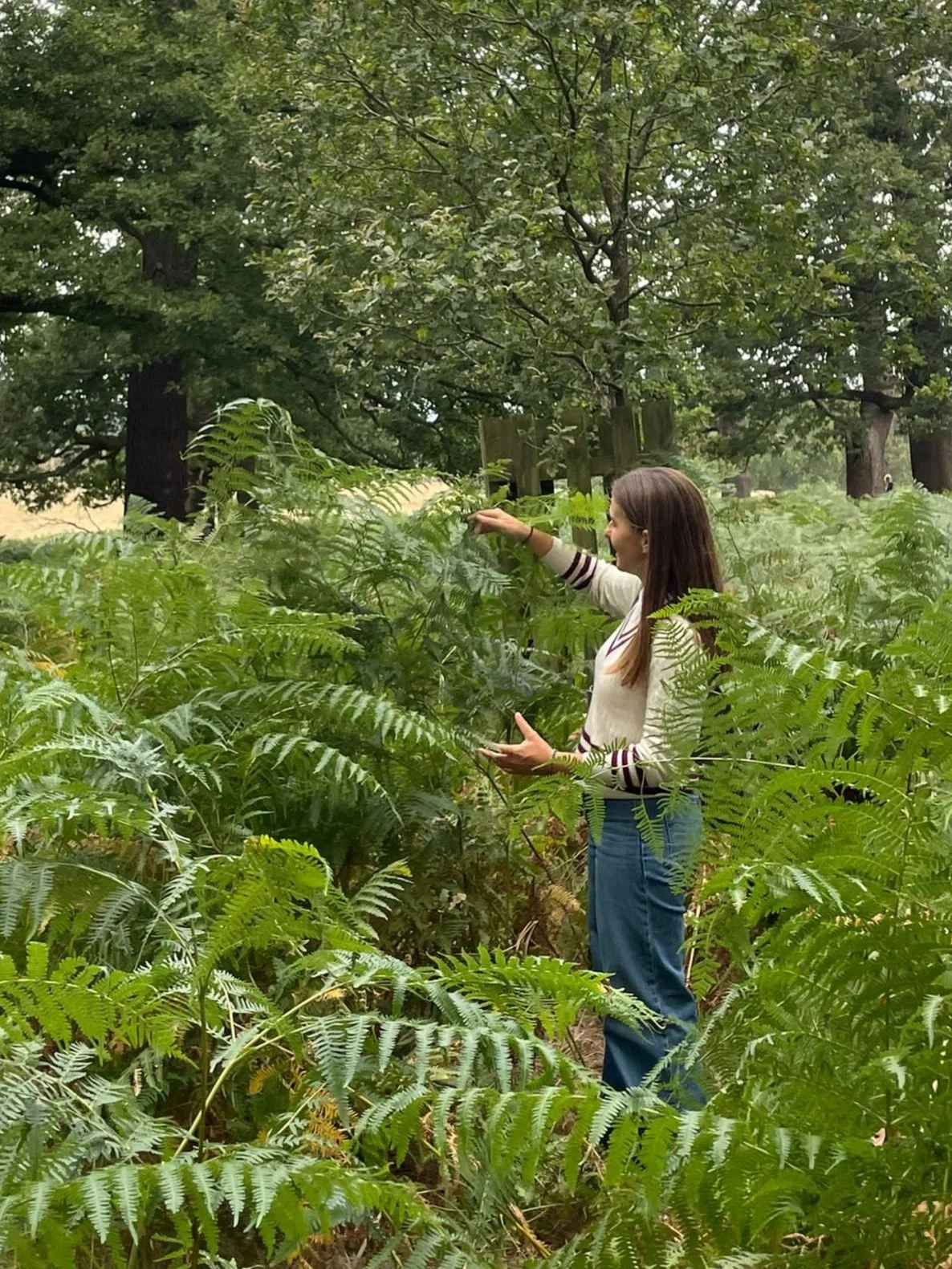
LANDSCAPE AND GARDEN DESIGNER
Graduated in Urban Planning from the Politecnico di Milano, with a thesis that studied the evolution and role of greenery in Milan.
Earned a Master’s degree in Garden Design from the Inchbald School of Design in London, studying under the mentorship of renowned landscape designer Andrew Duff and interior architect Alan Hughes. She was awarded the Inchbald Exhibition Prize by landscape designer Paul Gaserwitz.
Developed further professional experience in the studios of landscape architects Marco Bay and Tommaso del Buono, refining her approach to garden and landscape design across diverse contexts. Current commissions inlcude projects across South America and Italy.
‘From an early age, I discovered the language of nature. I remember walking through the woodlands of Northern Italy with my grandfather, learning to recognise trees and plants and sensing the rhythm of the earth beneath my feet. Paper and colours allowed me to imagine worlds and landscapes in which I could immerse myself. It is in this curiosity, at the intersection of observation and imagination, that I recognise the roots of my design sensibility.
My work begins with listening to a place and seeking a harmonious dialogue between architecture and nature. Every project starts with a site visit, an essential opportunity to engage with the context, observe its characteristics and understand its potential. Vegetation, light, shadows, landforms and the relationship with the architecture offer valuable clues. Nature teaches us more than we might imagine, and learning to observe it means finding the keys to designing with awareness, enhancing the identity of the landscape while respecting its natural balance. In this way, I seek to create spaces that evolve over time, where beauty, functionality and biodiversity coexist in harmony.
My vision has been shaped by encounters with diverse landscapes, from the countryside of Maremma to Uruguay and the vast territories of South America, which I had the opportunity to explore and discover while living in Argentina. From the depths of the Amazon rainforest to the boundless horizons of the Pampas, these landscapes introduced me to profoundly different expressions of nature, broadening my perspective and deepening my appreciation for the richness and complexity of ecosystems. In Buenos Aires, I observed how nature can intertwine with urban life and help define the identity of a place, from the shade of ombú trees to the spring blossoms of jacarandas. These experiences have strengthened my belief that landscape can bring a sense of openness and vitality even to the most densely built environments.
Nature is art—its colors, forms, and patterns inform every design decision. My aim is to create landscapes that honour this beauty, enrich everyday life, and transform spaces into places of ecological, social, and emotional value.’